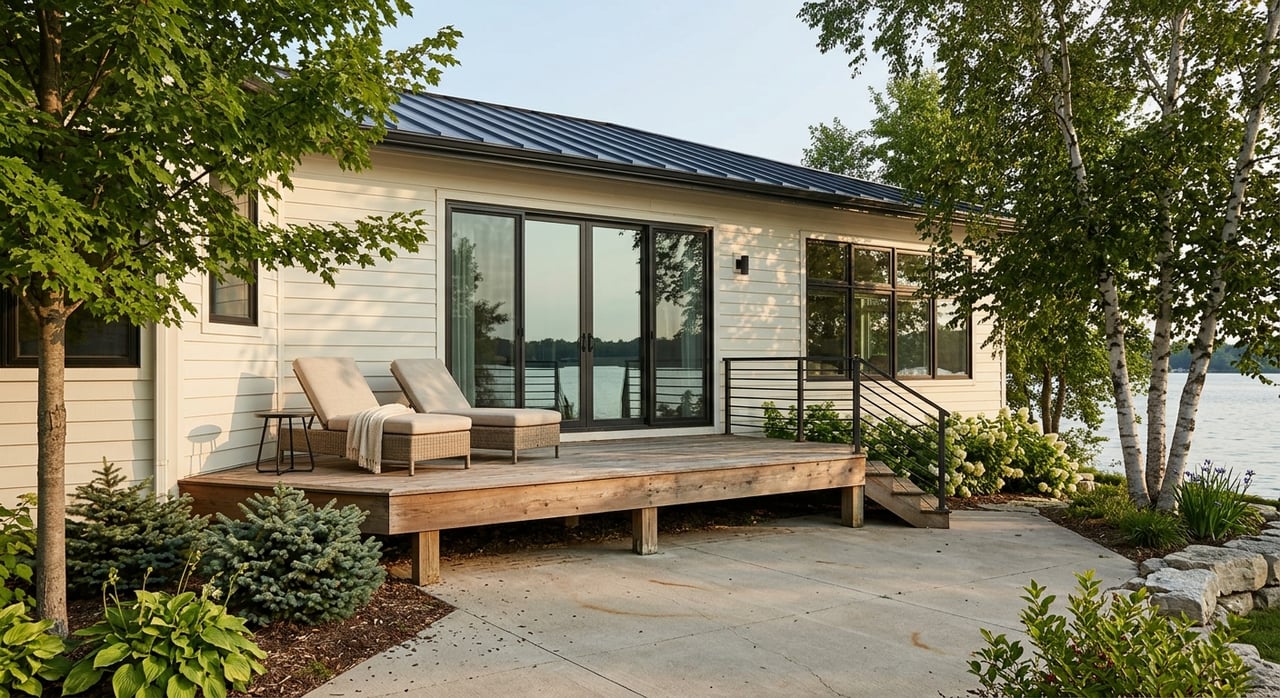
If you love the idea of living by the water, White Bear Lake gives you more than one way to do it. You can buy true lakefront with private shoreline, or you can choose a home a few blocks away and still enjoy much of the same lake-centered lifestyle. The right fit depends on your budget, how you plan to use the lake, and how much upkeep you want to take on. Let’s break down the tradeoffs so you can decide with confidence.
White Bear Lake Living Basics
White Bear Lake sits along the east border of the city and is shared by several communities, including White Bear Lake, White Bear Township, Dellwood, Mahtomedi, and Birchwood Village. That means a “White Bear Lake lifestyle” can come from homes with direct shoreline or from homes near the lake in neighboring municipalities.
For buyers, this matters because two homes with a similar lake feel may come with very different pricing, lot types, and local rules. It also means you need to compare properties carefully by address, jurisdiction, and access, not just by marketing language.
Lakefront Vs Near-Lake Pricing
The biggest difference for most buyers is price. In the broader White Bear Lake resale market, recent median sale price data ranges from about $357,286 over the last three months to a rolling 12-month median of $365,000, depending on the source.
By comparison, a current White Bear Lake lake-property feed shows 17 active listings averaging $1,653,324 and $402 per square foot. That mix includes direct waterfront, lake-view, and lake-area homes, so it does not represent a fixed waterfront premium, but it does show how large the pricing gap can be.
Directionally, that lake-property average is about 4.5 to 4.6 times the broader White Bear Lake median sale price. Its average price per square foot is also roughly 76% to 80% higher than broader market figures. In simple terms, private water access usually comes with a major step up in cost.
What Price Tiers Look Like
Current listings help show how wide the spread can be. Examples in the lake-property feed include direct-lakefront homes such as 4304 Cottage Park Road at $2.7 million and 2255 S Shore Boulevard at $2.495 million.
On the more accessible side, near-lake examples include 4523 Lincoln Avenue at $444,900 and 4975 Johnson Avenue at $495,000. There are also middle-ground options, such as 4853 Johnson Avenue at $1.25 million, where proximity and dock-access convenience can push pricing higher than a typical near-lake home.
What You Get With True Lakefront
Lakefront is mostly a scarcity-and-access purchase. You are paying for the ability to step outside and be at the water, along with the view, privacy, and day-to-day convenience that come with direct shoreline.
For many buyers, the biggest benefit is ease. You do not have to load up the car, hunt for parking, or work around launch fees just to spend time on the lake. If you want frequent water use, that convenience can change your daily experience in a big way.
Common Lakefront Benefits
- Direct shoreline access
- Potential for a dock or lift, depending on site conditions and rules
- Uninterrupted water views
- Easier day-to-day use of the lake
- A scarce property type with a distinct resale story
What Near-Lake Living Offers
Near-lake living is usually a convenience-and-budget purchase. You may give up private shoreline, but you can still stay close to the water while keeping your purchase price and ownership complexity lower.
This can be a smart fit if you care more about being near the lake than owning the shoreline itself. It may also leave more room in your budget for updates, interior space, or a more flexible monthly payment.
White Bear Lake also has multiple public and semi-public access points that help make near-lake living practical. The Minnesota DNR lists Ramsey County Beach, Matoska Park, and White Bear Docking for boat access, along with Lions Pier and City Pier for shore fishing.
The city also notes that Lakeview Park offers a canoe and kayak launch site with fishing docks, while Lions Park includes canoe and kayak access, fishing docks, and limited parking. So even without shoreline ownership, you can still enjoy the lake in many ways.
Private Access Vs Public Access
This is where the lifestyle difference becomes clearer. Public access is useful, but it is not the same as walking down your own shoreline.
The DNR notes that Matoska Park requires an annual permit and has only 15 parking spaces. White Bear Docking charges a launch fee, and Lions Park has limited parking. If you plan to be on the water often, those small logistics can add up.
The lake is also heavily used. The DNR describes White Bear Lake as a popular angling lake and notes that anglers should expect to compete with recreational boaters on weekends and holidays.
If you are considering winter use, the DNR says ice fishing is popular but requires caution because springs and open-water areas can be present. That is important whether you own on the lake or access it publicly.
The Hidden Cost Of Lakefront Ownership
The purchase price is only part of the story. True lakefront often comes with more maintenance, more regulation, and more year-to-year variability than a typical inland lot.
One major factor is water level fluctuation. According to the DNR, White Bear Lake has had nearly an eight-foot range between historic high and low levels, and the protective elevation of 922.0 feet above mean sea level is not a guaranteed fixed level.
In practical terms, that can affect dock usability, shoreline appearance, and how your property feels from season to season. A shoreline that works one year may feel different the next.
Dock And Shoreline Rules
The White Bear Lake Conservation District says basic docks do not require permits under DNR guidance, but larger or more complex structures do. It also notes that temporary docks are common because of likely ice damage and conflicts with winter recreation.
The city’s shoreland code also requires a shoreland impact plan for development in shoreland districts. The purpose is to reduce pollution, erosion, siltation, and deforestation, which means lakefront improvements often involve more review than a standard inland property.
Beyond city rules, the city states that the White Bear Lake Conservation District regulates boating activity, dock and marina construction, and weed removal. That extra layer is part of what makes lakefront ownership unique.
Ongoing Upkeep Considerations
White Bear Lake contains Eurasian watermilfoil and zebra mussels, so owners need to think about clean-drain-dry habits, weed management, and seasonal dock or lift maintenance. The city also points property owners to cost-share assistance through Rice Creek Watershed District for projects such as native plantings, rain gardens, shoreline restoration, and pervious driveways.
Near-lake homeowners usually do not deal with these shoreline-specific responsibilities in the same direct way. That can be a real advantage if you want a lower-maintenance ownership experience.
Resale Differences To Think About
Lakefront and near-lake homes can both resell well, but they often appeal to different buyer pools. True lakeshore is scarce, and the current lake-property feed shows only 17 active listings, which supports the idea that direct waterfront remains a limited product.
Because of that scarcity, lakefront buyers often focus heavily on shoreline condition, view quality, dock usability, and exact location. Interior updates still matter, but they are usually not the only value driver.
Near-lake homes often appeal to a broader pool because they offer access to the White Bear Lake lifestyle at lower price points. For many buyers, that balance of location, budget, and simpler upkeep makes near-lake properties easier to consider.
The broader White Bear Lake market is also competitive. Recent market data shows homes moving relatively quickly, with median days on market reported at 17 days in one recent three-month view and 35 days in a rolling 12-month view from another source.
Redfin also reports that many homes receive multiple offers, some with waived contingencies, and that the average home sells for about 2% above list price. Whether you target lakefront or near-lake, preparation matters.
How To Choose The Right Fit
The best choice is not about which option is objectively better. It is about which tradeoff fits your priorities.
If your main goal is private water access and you plan to use the lake often, true lakefront may justify the higher cost and extra ownership responsibilities. If your goal is to stay close to the lake while keeping more flexibility in your budget, near-lake may be the better move.
Choose Lakefront If You Want
- Direct access to the water from your property
- A more private lake experience
- Views as a major part of daily living
- A scarce property type
- The budget and time for added shoreline-related upkeep
Choose Near-Lake If You Want
- A lower purchase price than direct waterfront
- Access to the lake lifestyle without owning shoreline
- Simpler maintenance in many cases
- More flexibility to prioritize house features or monthly budget
- A broader range of property options around the lake area
Why Local Guidance Matters
Around White Bear Lake, small details can have a big impact on value and fit. A home may be marketed around the lake, but its municipality, access setup, shoreline rules, or proximity to launch points can change the ownership experience.
That is why a checklist-driven home search matters here. You want to compare not only price and square footage, but also access type, parking realities, dock considerations, water-level impact, and the local review process if you plan to make changes later.
If you are weighing lakefront against near-lake living in White Bear Lake, working with an experienced local broker can help you see the numbers clearly and avoid surprises. For step-by-step guidance on buying or selling around the lake, connect with James Sanchez.
FAQs
What is the main difference between lakefront and near-lake living in White Bear Lake?
- Lakefront usually means direct shoreline access, higher pricing, and more ownership responsibilities, while near-lake usually means lower cost, no private shoreline, and easier upkeep.
How much more expensive is lakefront property in White Bear Lake?
- Directionally, the current White Bear Lake lake-property feed average is about 4.5 to 4.6 times the broader White Bear Lake median sale price, though that feed includes a mix of waterfront, lake-view, and lake-area homes.
Can you enjoy White Bear Lake without owning shoreline?
- Yes. Public and semi-public access points include Ramsey County Beach, Matoska Park, White Bear Docking, Lions Pier, City Pier, Lakeview Park, and Lions Park.
What extra responsibilities come with White Bear Lake lakefront ownership?
- Lakefront owners may need to manage dock rules, shoreland review requirements, seasonal maintenance, invasive species concerns, and the effects of changing water levels.
Are homes around White Bear Lake all in the same city?
- No. White Bear Lake is shared by White Bear Lake, White Bear Township, Dellwood, Mahtomedi, and Birchwood Village, so local rules and property context can vary by address.
Is the White Bear Lake market competitive for buyers?
- Yes. Recent market data shows relatively fast selling times, and Redfin reports that many homes receive multiple offers, with the average home selling about 2% above list price.